

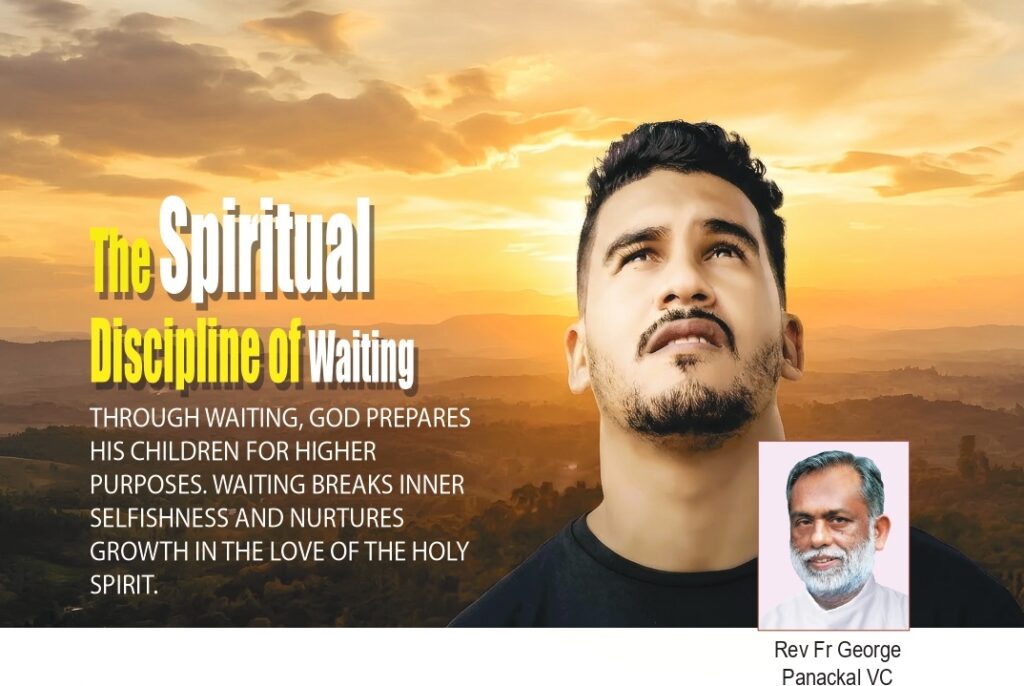
H uman beings, by nature, do not like to wait. Waiting feels unnatural to our self-centered instincts. We live in a world that prizes speed, efficiency, and instant gratification. Yet, waiting forces us to confront our limitations. It reminds us that we are not in control, and that time itself belongs to God. To wait is to acknowledge that there is One greater than us, before whom we must humble ourselves. In this way, waiting dismantles pride and slowly erodes selfishness. As Scripture says, “Be still before the Lord and wait patiently for him” (Ps 37:7).
To the human mind, waiting often appears to be wasted time. The ego resists it, demanding immediate answers and quick solutions. But in God’s economy, waiting is never wasted. It is a form of spiritual training, a divine classroom where the soul is taught patience, humility, and trust. Through waiting
God prepares His children for higher purposes, teaching them to handle greater responsibilities by first enduring smaller trials. Waiting breaks inner selfishness and nurtures growth in the love of the Holy Spirit Waiting in Sacred Scripture
The Bible is filled with stories of waiting. Each of God’s chosen servants was shaped through this discipline before being entrusted with greater missions.
Noah was commanded to build an ark in a place where there was no sign of water. He waited for years, enduring ridicule and mockery from those around him. Yet his obedience in waiting preserved humanity. It is recorded: “By faith Noah, being warned by God concerning events as yet unseen, in reverent fear constructed an ark for the saving of his household.” (Heb 11:7).
Abraham’s life was marked almost entirely by waiting. He waited decades for the fulfillment of God’s promise of a son. St Paul writes, “No unbelief made him waver concerning the promise of God, but he grew strong in his faith as he gave glory to God, fully convinced that God was able to do what he had promised” (Rom 4:20-21).
Joseph endured years of unjust imprisonment for a crime he did not commit. Those painful years of humiliation became God’s training ground, preparing him to govern Egypt and save nations from famine. Scripture records Joseph’s words: “You meant evil against me, but God meant it for good, to bring it about that many people should be kept alive.” (Gen 50:20).
Moses spent forty years in the desert as a shepherd before leading Israel out of Egypt. That long season of waiting stripped him of pride and prepared him for the humility required to shepherd God’s people.
David was anointed king as a young man, yet he spent years fleeing from Saul, hiding in caves, and enduring hardship before ascending the throne. His psalms reflect the pain and beauty of waiting: “I waited patiently for the Lord; he inclined to me and heard my cry” (Ps 40:1).
Saint Paul experienced a powerful encounter with Christ on the road to Damascus, but his full mission unfolded only after years of waiting and preparation. Even during his most fruitful ministry, God allowed him to endure further waiting through imprisonment. Paul writes, “I want you to know, brothers, that what has happened to me has really served to advance the gospel, so that it has become known
throughout the whole imperial guard and to all the rest that my imprisonment is for Christ” (Phil 1:12-13).
Jesus Himself taught His disciples the discipline of waiting. After His ascension, they were instructed to remain in Jerusalem until they received the Holy Spirit. It is recorded: “And while staying with them He ordered them not to depart from Jerusalem, but to wait for the promise of the Father” (Acts 1:4). Their days of prayerful waiting in the upper room prepared them for Pentecost, the birth of the Church.
Transforming Waiting into Fruitfulness
God invites us to transform what feels painful into something fruitful. Waiting is not passive resignation but active trust. Scripture urges us to wait calmly, patiently, courageously, and with hope. The prophet proclaims, “But they who wait for the Lord shall renew their strength; they shall mount up with wings like eagles; they shall run and not be weary; they shall walk and not faint” (Is 40:31).
The human person is called to turn the suffering of waiting into moments rich in prayer, filled with patience, inner peace, and trust. Waiting becomes a sacred space where faith is tested and strengthened. It is in waiting that we learn to surrender our timelines to God’s perfect timing. We are reminded, “The Lord is good to those who wait for Him, to the soul who seeks Him” (Lam3:25).
When embraced in faith, waiting no longer destroys; it refines. It strengthens character, deepens trust, and prepares us for God’s greater work. Waiting is not wasted time-it is holy time. It is the furnace where selfishness is burned away, the soil where patience grows, and the path that leads us closer to God’s purposes.