
BY REFLECTING ON THE LIFE OF JESUS, WE DISCOVER ESSENTIAL LESSONS FOR UNLOCKING THE SPIRIT’S POWER IN OUR LIVES
Introduction The Gospel of Luke recounts a pivotal moment in Jesus” ministry: “Then Jesus, filled with the power of the Spirit, returned to Galilee, and a report about Him spread through all the surrounding country… When He came to Nazareth where He had been brought up. He went to the synagogue on the Sabbath day as was His custom…” (Lk 4:14-19). This passage highlights the central role of the Holy Spirit in the life of Christ and, by extension, in the life of every believer. Without the Spirit, we cannot truly encounter the love of God, repent of our sins, or live a life of faith. As St Paul reminds us. “The love of God has been poured into our hearts through the Holy Spirit given to us” (Rom 5:5). Jesus says, “It is the Holy Spirit who convicts us of our sins” (Jn 16:8). Therefore, if we want to repent over our sins, we need the Holy Spirit. Yet many Christians struggle to experience the Spirit’s power. Why is this so? The answer lies not in the absence of the Spirit who is given to us in baptism and the sacraments but in the failure to cultivate the discipline necessary to live in His presence. By reflecting on the life of Jesus, we discover two essential lessons for unlocking the Spirit’s power: discipline and prayer.
The Discipline of Jesus
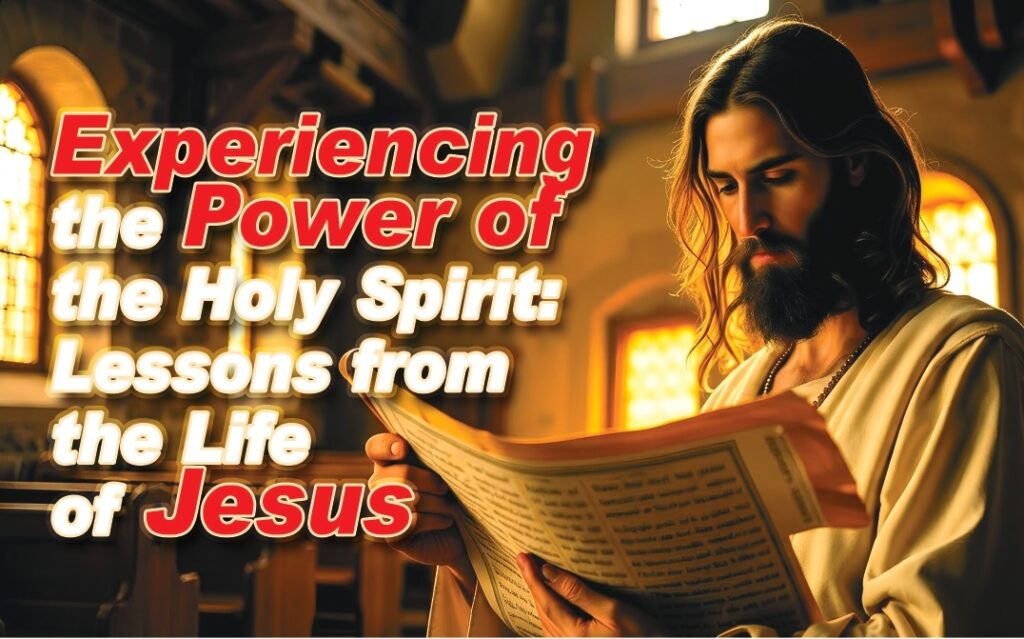
Luke emphasizes that Jesus regularly attended the synagogue on the Sabbath, “as was his custom.” Though He was God and did not need such practices, Jesus submitted to them to teach His disciples the importance of discipline. Hisactions were not for Himself but for those who followed Him.
Morning Prayer: Mark records, “In the morning, while it was still very dark, Jesus got up and went to a deserted place, and there He prayed” (Mk 1:35). Even in exhaustion, Jesus prioritized prayer.
Daily Teaching: Luke notes, “Every day He was teaching in the temple” (Lk 21:37). Despite the demands of ministry, Jesus remained faithful to His spiritual routine.
Night Vigil: After long days of walking and healing, Jesus ascended the Mount of Olives to pray. In biblical tradition, mountains symbolize communion with God-Abraham on Mount Moriah, Moses on Sinai, Elijah on Horeb. Jesus continued this rhythm, ending His day in prayerful solitude.
Withdrawal for Prayer: Luke again observes, “He would withdraw to deserted places and pray” (Lk 5:15-16). Jesus did not equate ministry with worship; He set aside specific times for communion with the Father. Through these examples, Jesus demonstrates that discipline is the foundation for experiencing the Spirit. Prayer is not a matter of feelings or emotions but of faithful commitment.
Discipline versus Emotion
Many believers often allow emotions to dictate their spiritual lives: “I don’t feel like praying today,” or “I don’t feel like going to church.” Such attitudes hinder growth in the Spirit. Discipline, not emotion, sustains spiritual progress.
St. Paul illustrates this truth to Timothy by comparing the Christian life to that of a soldier, an athlete, and a farmer (II Tim 2:3-7). Each of these figures achieves success through discipline: A soldier wins battles by adhering to strict routines. An athlete earns medals through years of training, not sudden inspiration. A farmer reaps a harvest through consistent labour and patience. In the same way, Christians must cultivate discipline to
experience the Spirit’s power.
Great athletes and leaders show us that discipline matters more than feelings. A boxer once said, “I hated training, but I told myself: don’t quit, suffer now, and see the glory later.” Similarly, Indian Olympic medallist Sushil Kumar loved parathas but gave them up for his goal. Success comes not from doing things when we feel like it, but from doing them regularly, even when we don’t.
St Paul compared spiritual life to farming: a farmer cannot sow seeds and then go on a picnic. He must water, weed, and nurture daily to reap a harvest. In the same way, spiritual growth requires steady discipline reading Scripture, prayer, worship, Eucharist, confession-not just occasional bursts of emotion. Peace and joy come through order and consistency.
Socrates said, “An unexamined life is not worth living.” Examining ourselves daily leads us to true repentance. Excuses like “I’m too busy” don’t hold up; Daniel, though a high official, prayed three times a day without fail. His enemies found no fault in his work only his unwavering devotion. It is a well known principle that where there is a will, there is a way; where there is no will, there are excuses.
Discipline means going beyond taste, beyond feelings, beyond convenience. Jesus said, “Unless you deny yourself, you cannot follow me” (Mt 16:24). True discipleship is not about occasional effort but about daily, faithful practice. To grow in the Spirit, discipline is essential. Retreats bring joy and peace, but without discipline, that grace fades when we return to daily life. True growth comes not from staying in a retreat centre forever, but from living a disciplined spiritual life that keeps us rooted in the Lord’s power.
The gift of the Holy Spirit and evangelization Jesus shows us the way: He read Isaiah’s prophecy, “The Spirit of the Lord is upon me” (Lk 4:18), and then went out to proclaim the good news. Evangelization is not reserved for priests or religious it is the mission of every baptized Christian. Baptism sets us apart to spread Christ, not just virtues like kindness or honesty, but the gospel itself: Jesus crucified and risen. Prayer alone is not enough. Just as physical training requires effort and balance, so does spiritual training. If we only “consume” prayer without sharing the Spirit through mission, our spiritual life becomes stagnant. The Spirit is a gift meant to be used like a powerful vehicle that must be driven, not admired from a distance. The Holy Spirit is freely given, not because of our merit, but for a purpose: to glorify Christ and bring others to Him. When prayer and evangelization are balanced, life flourishes, and the Spirit works powerfully within us.
Our Christian Calling Election in the Bible is not about God choosing someone because of their greatness or merit instead God elects with a mission. For example, He chose Israel not because Israel was powerful or righteous, but despite being small and sinful. The purpose was clear: through Israel’s worship and service, all nations would be drawn to the true God. Israel was essentially a launch pad for God’s plan. In the same way, Christians are not chosen because we are better than others. We are called so that the world may know Jesus. If we remain silent, we fail the very purpose of this election. Evangelization is not optional it is our vocation. Often, fear holds us back. We worry that speaking about Jesus will make us seem narrow-minded, fanatical, or fundamentalist. But Christianity is not a private, secret faith. If we have truly experienced Christ, we cannot keep Him hidden we must share Him.
Truth vs. Fanaticism Being labelled a fanatic for speaking the truth is a misunderstanding. Jesus Himself declared: “I am the way, the truth, and the life. No one comes to the Father except through me” (Jn 14:6). He did not claim to be one of many ways, but the only way. That is not fanaticism-it is truth. When Jesus taught, “Unless you eat my flesh and drink my blood, you have no life in you” (Jn 6:53), many followers left Him. Yet He did not force them to stay, nor did He change His message. Truth does not bend to opinion. Our duty is to proclaim Jesus as Lord and Saviour of all humanity, whether people accept it or not.
The Urgency of Evangelization Many people today drift away from the Church or live without knowing Jesus simply because Christians remain silent. Some who later encounter Christ lament, “I wish someone had told me earlier.” This shows the urgency of our mission. But how can we share Jesus if we ourselves do not know Him? Too often, we lack understanding of Scripture, the sacraments, or even the meaning of the Eucharist. To evangelize, we must first deepen our own faith. Mother Teresa exemplifies this mission. She disciplined herself to spend one hour daily before the Blessed Sacrament, even when it felt dry or difficult. From that prayer flowed her ministry. She was not merely a social worker-her purpose was to do “something beautiful for my Lord.” With only five rupees, she entered the slums of Kolkata, driven by love for Jesus. Her ministry spread worldwide, always anchored in the Eucharist. Wherever she went, her first request was for a chapel with the Blessed Sacrament. Through her disciplined prayer and service, countless people came to know Christ.
Conclusion The Holy Spirit is already present in the life of every baptized believer. Yet to truly experience His power, we must follow the example of Jesus: embrace discipline, commit to prayer, and rise above fleeting emotions. The Spirit works most powerfully in lives that are ordered, faithful, and rooted in communion with God. By imitating Christ’s discipline, we open ourselves to the Spirit’s inspiration, conviction, and love. Only then can we proclaim, with Jesus, “The Spirit of the Lord is upon me, because He has anointed me to bring good news to the poor…” (Lk 4:18).